Entry dated :: September 29, 1965
Washington DC
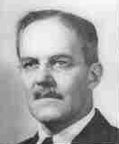
Allen Welsh Dulles:
The Spy Master


A year had passed since the publication of the Warren Report and most, if not all, of the analysis of it to date fell into two schools: blind faith or demonology. The blind-faithers reasoned that because the members of the Warren Commission were men of unquestionable integrity, they would not conceal evidence of a conspiracy. Therefore, there was no conspiracy. The demonologists, on the other hand, believed because evidence of a conspiracy had not been dispelled, the Warren Commission must have been part of the cover up. Both schools made the common assumption that the Warren Commission had indeed investigated discovered the relevant facts. But after now interviewing half the Commissioners and key staff lawyers, I was beginning to realize that there was another possibility: the Warren Commissioners, though honest, had not had the time or investigative resources to resolve the issue of whether or not Oswald had acted alone. It turned out that their exhaustive investigation was only ninety days before they called to write the report, and, during this period, and, under this time pressure, their staff had complained of arbitrariness, deadlines, administrative chaos, bureaucratic infighting, and constant pressure "to close doors rather than open doors them." Allan Dulles, though in seventies, had attended more meeting than any other Commissioners and he also had the intelligence background to understand investigative limits.

After receiving his law degree in 1926, he served briefly as counselor to the U.S. delegation in Peking and then joined the New York law firm of Sullivan and Cromwell, of which his brother, John Foster Dulles, was a partner. When the United States entered World War II, Dulles was recruited by Colonel William J. Donovan for the Office of Strategic Services and played a notable role in the events that led to the surrender of German troops in northern Italy. In 1948 Dulles was made chairman of a three-man committee charged with surveying the U.S. intelligence system. After the CIA was established in 1951, he served as deputy director under General Walter Bedell Smith, and in 1953 he was appointed director by President Dwight D. Eisenhower but fired by President John F. Kennedy after the failure of the Bay of Pigs invasion of Cuba in April 1961.

He invited me to his Georgetown home on Q Street. He looked more like a Mr. Chips headmaster at a preppy school than a retired Director of Central Intelligence. While his wife Clover served us a leisurely tea, he reminisced how the Commission's inquiry differed from those he had conducted at the CIA.

The questions proceeded along the following lines:

Q. How did you get involved with the Warren Commission?

A. The President called me--I had no advance notice--the Saturday after Thanksgiving (1963)

Q. When was the first meeting?

A. December 7th. It was an organizational meeting. Warren had a choice for General Counsel, but he was rejected--I can't discuss the reasons--nd we agreed on Rankin.

Q. What were the early decisions the Commission made?

A. First, we unanimously and immediately decided that we could not rely solely on FBI or any one agency. Secondly, we decided to use independent lawyers, but not independent investigators. We were to borrow investigators from individual agencies.

Q. Why didn't you use independent investigators?

A. We did in case of fingerprint experts to double-check on FBI. We relied primarily on the best trained men.

Q. How long. based on your experience, did you think the investigation would last?

A. I expected it to last at least six months, and most probably longer.

Q. Why was it considerably shorter in fact? The Investigation was March 15-June 15.

A. There wasn't as many witnesses as I expected and the witnesses were far more cooperatives than I expected. There were surprisingly few witnesses

Q. What were the problems That arose before the Hearings began in February.

A. They were mainly procedural problems. The treatment of evidence, lawyers for witnesses, open or closed hearings. In short, the legal aspects of our Commission's work.

Q. What about the calling of witnesses?

A. Yes. That was another problem. From the FBI Reports, we drew a list of witnesses. Also, the members decided that they wanted to hear Marina first. Then Oswald's other relatives. By the end of December, we had decided on the witnesses we considered most important, and wanted to hear.

Q. Did you worry about Commission Precedents?

A. No. The only precedent I can think of it the Roberts Commission, although the President's Committee on Stolen Art did a similar job. We really didn't have any close precedent.

Q. Did members have any problem in getting going?

A. No. We all had a great deal of experience in these problems. Russell runs Committees, so do Boggs, Ford, Cooper, McCloy and I know these type problems, we knew we needed a Counsel(an executive director), a staff, and cooperation with other agencies.

Q. Did it go smoothly?

A. It went more smoothly than I expected. The witnesses cooperated more fully. No problems arose.

Q. What about the Selection of Staff?

A. We gave Mr. Rankin a free hand in selecting the staff. We accepted his judgement. It was out decision to use independent non-government lawyers

Q. Why non-government lawyers?

A. We already had 3 from Dept of Justice, we wanted outside lawyers so it wouldn't look like a government report.

Q. At the Jan 22nd meeting, was there a problem of Oswald and the FBI?

A. This was the most serious problem we faced. An emergency meeting was called, up until this time we had discussed only organizational matters.

Rankin reported accusations that Oswald was a paid FBI informer. I knew it was bunk from the start but we'd have a hard time proving it. There was less fuss then we all expected about it. it was very damaging, if true, and concerned our security.

Q. How did you know it was untrue?

A. I know J. Edgar Hoover and I know that he would never employ anyone like Oswald.

He was too unstable.

Q. How did you disprove this accusations of a FBI connection?

A. We traced rumor to Lonny Hudkins, a reporter, and he admitted it was bunk.

Q. You didn't speak to Mr. Hudkins personally?

A. No. Rankin sent down a representative, and Hudkins told him there was no basis to the story.

Q. At your Colloquium, you precluded the possibility that "Oswald was a tool of anyone." How did you know?

A. He was "too unstable" to be employed as a spy.

Q. Why was Colloquium kept secret?

A. The psychiatrists wanted it that way.

Q. What was the main result of Colloquium?

A. We decided we couldn't use psychiatric terms to describe Oswald, or other witnesses.

Q. On Oswald & FBI-Isn~t it difficult to prove someone e is not an agent?

A. Very difficult. Informers are not employees and sometime records are not kept.

Q. Was Ford's book accurate?

A. Yes. I think so.

Q. Was a transcript kept of that meeting?

A. Yes. I remember notes of that meeting kept.

Q. Did you have any areas of special interest?

A. Yes, I was interested in foreign conspiracies, especially those done by governments. I wanted to exhausts these possibility.

When we exhausted this possibility--for e.g. we checked Ruby's money for serial numbers against lists of communist money-- I felt we exhausted rumors that were explorable, that we could get our teeth into. I felt I served a purpose.

Q. Did you think the investigation concerning National Security mattered?

A. Any government investigation concerns national security."

Q. Was the dispelling of rumors of paramount importance?

A. Rumors were a definite concern. They injured, the national security, and caused unrest in foreign governments.

Q. Did Foreign Governments believe the rumors?

A. They believe what they want to believe. Many governments were concerned with the results we would reach. When, in May, we staged a second reconstruction test, there were a great deal of inquiries and concern. If we found a conspiracy, it could affect foreign policy, of course,we didn't find a conspiracy.

Q. Were rumors important in the conducting of the investigation?

A. We decided not to answer rumors, piecemeal, and therefore we were concerned with finishing the Report as soon as possible. McCloy felt rumors were hurting American prestige abroad, and I agreed. We wanted therefore to finish up as soon as possible.

Q. Did rumors cause specific problems?

A. Yes. They wasted a great deal of our time and energy. We decided to refute and dispel all rumors as far as possible. Some were not possible because, we couldn't get out teeth into them. We asked Mark Lane to testify, and then asked our staff to answer every one of his charges. I think they did,, but they wasted time.

Q. What did you conceive was goal of Commission.

A. Dispelling rumors that are damaging and preventing others that would be damaging. A plethora of rumors would be damaging to National Security.

Q. Do you think there was too much separation between staff& Commission?

A. No. In government. operations, it is usual to pass information upwards. There were also informal lunches, etc.

Q. Why was Willens disciplined for withholding evidence?

A. I Don't remember. But we didn't want fragmentary evidence, we wanted it presented as a whole with corroboration. That was staff's job.

Q. Was your Report substantially different from the 5 volume FBI Report?

A. No. The facts were the same. We developed Oswald's background, motives, and exhausted rumors of conspiracy. We looked into negatives, and they proved negative.

Q. Why was the FBI Report made?

A. They had a Presidential mandate. It was extremely accurate and there were no differences.

Q. Did it Preempt Commission work.

A. No.On the contrary, it gave us a point of departure.

Q. Did the FBI do a good job in subsequent investigation?

A. Very good.

Q. Did the CIA make summary report?

A. No. My old agency only concerned with specific requests. It did a foreign check on DeMohrenshield, But main burden was done FBI.

Q. Do you think the ad hoc nature of Warren Commission interfered with other agencies?

A. No. We were all government men, we knew how to work with other agencies.

Q. How did you feel about Connally bullet. The so-called single bullet theory?

A. Connally was adamant, and so was Russell. We thus could not agree. I thought one bullet did hit both men. There was no definite evidence but I thought ballistics was strongly indicative. Others disagreed.

Q. How did you decide when to end Investigation?

A. First of all, rumors were disturbing, and there was tremendous pressure to get the Report out. Secondly, lawyers wanted to get back to their practice. Thirdly, Commissions had other things to do. Finally, there was little probability that further investigation would produce different conclusions.

Q. In your business, is an investigation ever over?

A. We sometimes exhaust all the probabilities of developing reliable new information, diminishing returns set-in, and, investigations must be ended.

Q.Who wrote the Report?

A. Rankin wrote first draft. Commissions added points.

Q. What of Oswald's motives?

A. Very difficult and complex question. We simply Indicated factors.

Q. Did time pressure influence Report?

A. No. We had ample time.

Q. At CIA, would investigation be structured differently?

A. Our purpose was to inform public and dispel rumors. This is not the purpose of CIA analysis. In CIA, we usually have greater problem with verification. In Warren Commission, most witnesses were ordinary people. Completely different.

Q. Did investigation influence other agencies? Shake them up?

A. I don't think so. We found coordination better than I expected.

Q. Would FBI Investigation have came to same conclusions?

A. Yes. On the substantiative questions.

Q. How was the Press on issue?

A. Newspapers tend to fill gaps with fabrications.

The interview lasted two hours. Dulles did not seem to have much to do, so we chatted for a while about Cornell and then Russia. He said that he still was not satisfied that the Russian government had provided the Commission with all the dirt they had on Oswald. He added cryptically that there was one defector who might have helped-- but he was unavailable. He said his identity was still a state secret.


Questions? Email me at edepstein@worldnet.att.net
This website is still (heavily) under construction. The webmistress can be reached at june@jooon.com